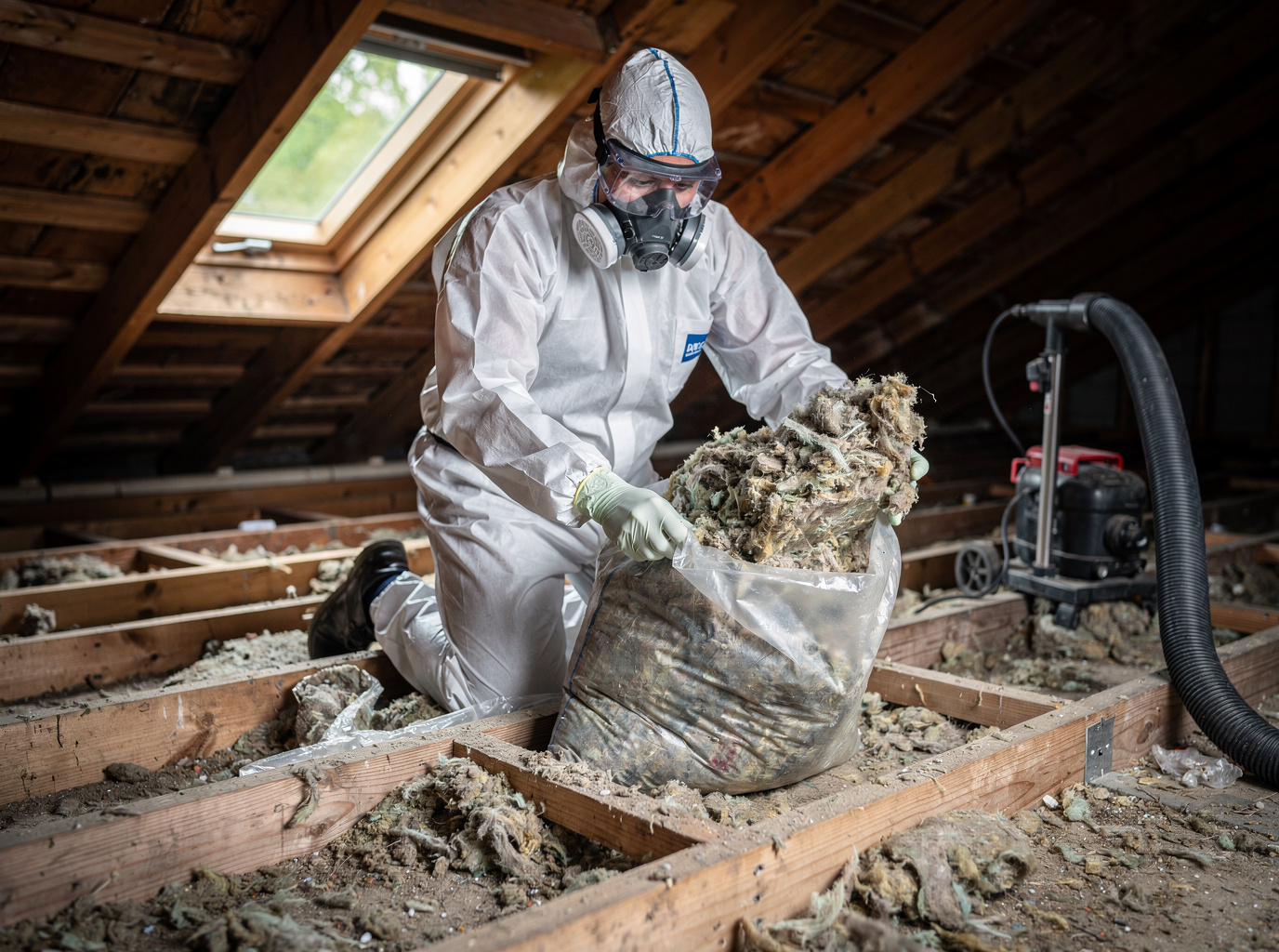
Rodent urine and droppings quickly saturate fiberglass and cellulose insulation in Spring attics, especially during the long humid summers when moisture lingers. In older homes throughout Old Town Spring Historic District and Imperial Oaks, blown-in cellulose holds liquid waste against rafters, creating hidden mold colonies that spread through the humid subtropical air. Removing only the surface layer leaves the problem intact and risks spreading spores into living spaces.
Harris County homes near Spring Creek Greenway often have limited attic access and knee-wall cavities that trap contaminated material. Crews must cut precise entry points, bag waste under negative pressure, and HEPA-vacuum rafters before any new insulation can be installed. Failure to address the full depth allows rats from nearby wooded edges to re-contaminate the space within weeks.
Disposal follows local landfill rules for bio-contaminated material; simply tossing insulation into regular trash can result in fines. In neighborhoods like Spring Creek Oaks, where many homes sit on pier-and-beam foundations, crews also check crawlspaces where insulation under floors has been soiled by roof rats traveling along utility lines from The Woodlands and Conroe corridors.
Technician insight
In Spring the thing that catches most people out with Contaminated Insulation Removal is how fast the humid subtropical summers turn rodent urine into active mold inside cellulose, especially in the unvented attics common in Imperial Oaks homes built before the mid-1990s.
Old Town Spring Attic Job
Homeowner in the Old Town Spring Historic District noticed a strong odor and ceiling stains after rats entered through a soffit gap. We found three inches of saturated cellulose pressed against rafters with visible mold. After negative-pressure removal and sanitization the attic was left clean and sealed, allowing safe installation of new insulation the following week.
Contaminated Insulation Removal Services We Offer
✓Attic Insulation Extraction
Complete removal of urine-soaked fiberglass or cellulose from attics in Spring homes, including bagging under containment to prevent airborne spores.
✓Wall Cavity Decontamination
Targeted removal of contaminated insulation inside exterior walls where rats have nested, followed by sanitization of studs before new material is installed.
✓Crawlspace Insulation Removal
Extraction of soiled underfloor insulation in pier-and-beam homes common in Spring Creek Oaks, with moisture control to limit future rodent attraction.
✓Rodent Waste Sanitization
Application of EPA-registered disinfectants to rafters, joists and sheathing after insulation removal to neutralize bacteria and odors left by rats.
✓Eco-Friendly Contaminated Disposal
Transport of bagged insulation and debris to approved Harris County facilities that accept rodent-contaminated construction waste.
✓Post-Removal Attic Prep
Sealing entry points and installing temporary vapor barriers so homeowners can schedule new insulation installation without recontamination risk.
Contaminated Insulation Removal Cost in Spring, TX
| Service | Typical Range | What Affects It |
|---|---|---|
| Full Attic Removal | $1,400–$3,200 | Varies with home size and whether multiple layers of insulation must be extracted. |
| Wall Cavity Cleanup | $650–$1,400 | Price rises with number of affected exterior walls and need for interior access cuts. |
| Crawlspace Insulation Removal | $900–$2,100 | Higher when moisture or limited headroom slows bagging and extraction. |
| Sanitization Add-On | $350–$650 | Optional deep disinfectant treatment of all exposed wood after removal. |
Ranges are typical for Spring, TX and confirmed with an exact written quote before any work starts.
How it works
- 1
Detailed Inspection
Technicians examine attic, walls and crawlspaces using inspection cameras to map all contaminated zones and identify active rodent entry points.
- 2
Containment Setup
Plastic sheeting and negative-air machines isolate the work area so dust and spores do not migrate into living spaces during removal.
- 3
Material Removal
Insulation is cut out in sections, double-bagged and removed through exterior access points to avoid dragging waste through the home.
- 4
Surface Sanitization
Rafters and cavities receive disinfectant treatment followed by HEPA vacuuming to eliminate remaining waste residue.
- 5
Final Walkthrough
Homeowner reviews cleared areas and receives guidance on sealing and future insulation choices before the crew departs.
Pricing
Cost depends on square footage, depth of contamination, and access difficulty in older Spring homes.