2026-09-16 · David Ellis
Why Roof Rats Get Into Attics in Spring TX
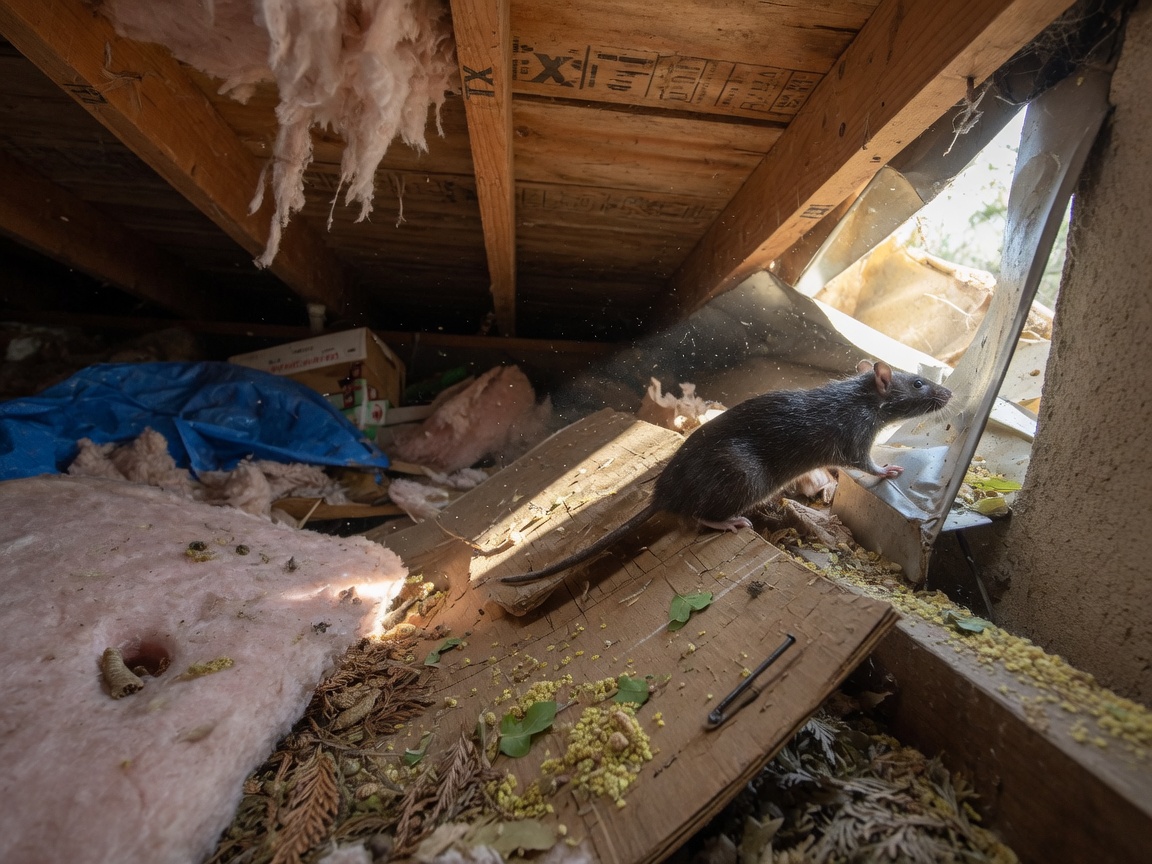
Roof rats enter attics in Spring TX because the area's humid subtropical climate with hot humid summers pushes them from outdoor nests into dry roof spaces, while mature trees and aging rooflines in neighborhoods like Imperial Oaks and near the Spring Creek Greenway create direct pathways through soffits, vents, and fascia boards.
Climate Drivers in Harris County
Spring's hot humid summers send roof rats indoors for stable temperatures and dryness once outdoor food sources dwindle. Homes in Old Town Spring and Spring Creek Oaks often sit amid dense vegetation that holds moisture, encouraging rats to climb utility lines and branches toward attics. The same humidity accelerates wood rot around eaves, widening small gaps into entry points over just a few seasons. Rats exploit these conditions year-round but peak activity follows the heaviest summer rains when ground-level burrows flood.
Tree and Structure Access Points
Mature oaks and pines common along Spring Creek Greenway and in Imperial Oaks let roof rats reach second-story eaves without touching the ground. Power lines running between homes in Spring Trails and Champion Forest serve as highways, allowing quick movement from one attic to another. Older construction in the Old Town Spring Historic District features wider soffit gaps and unsealed pipe penetrations that newer builds in The Woodlands avoid. These physical routes explain why roof rats appear even in well-maintained properties surrounded by green space.
Attic Entry Vulnerabilities
Standard roof vents, ridge vents, and bathroom exhaust fans in Spring homes frequently lack intact screens after years of humidity exposure. Gaps as small as a quarter-inch around plumbing stacks or AC lines provide enough room for roof rats to squeeze through. In neighborhoods like Cypresswood and Gleannloch Farms, two-story homes with attached garages create additional roof junctions where flashing fails and creates hidden openings. Once inside, rats follow insulation and wiring to nest in the warmest corners away from human activity.
Recognizing the Problem Early
Scratching sounds in ceilings at dusk often signal roof rats traveling between the attic and nearby trees. Droppings the size of rice grains near insulation or stored boxes confirm activity before odors develop. Residents noticing these signs benefit from a professional rodent inspection that maps entry routes specific to their roofline. Early attention prevents larger contamination issues that require attic rat removal later.
Long-Term Prevention Steps
Sealing identified gaps with metal mesh and trimming branches within six feet of the roof stops most new entries. Property owners in Benders Landing Estates and Timber Lane have success combining these physical fixes with rodent exclusion work that targets the full exterior. Learning which DIY methods actually hold up in local conditions is covered in DIY Rodent Deterrents for Spring Homes: What Actually Works. Consistent monitoring around the address at 20807 Marilyn Ln shows how small seasonal changes in vegetation and weather shift rat pressure on attics.