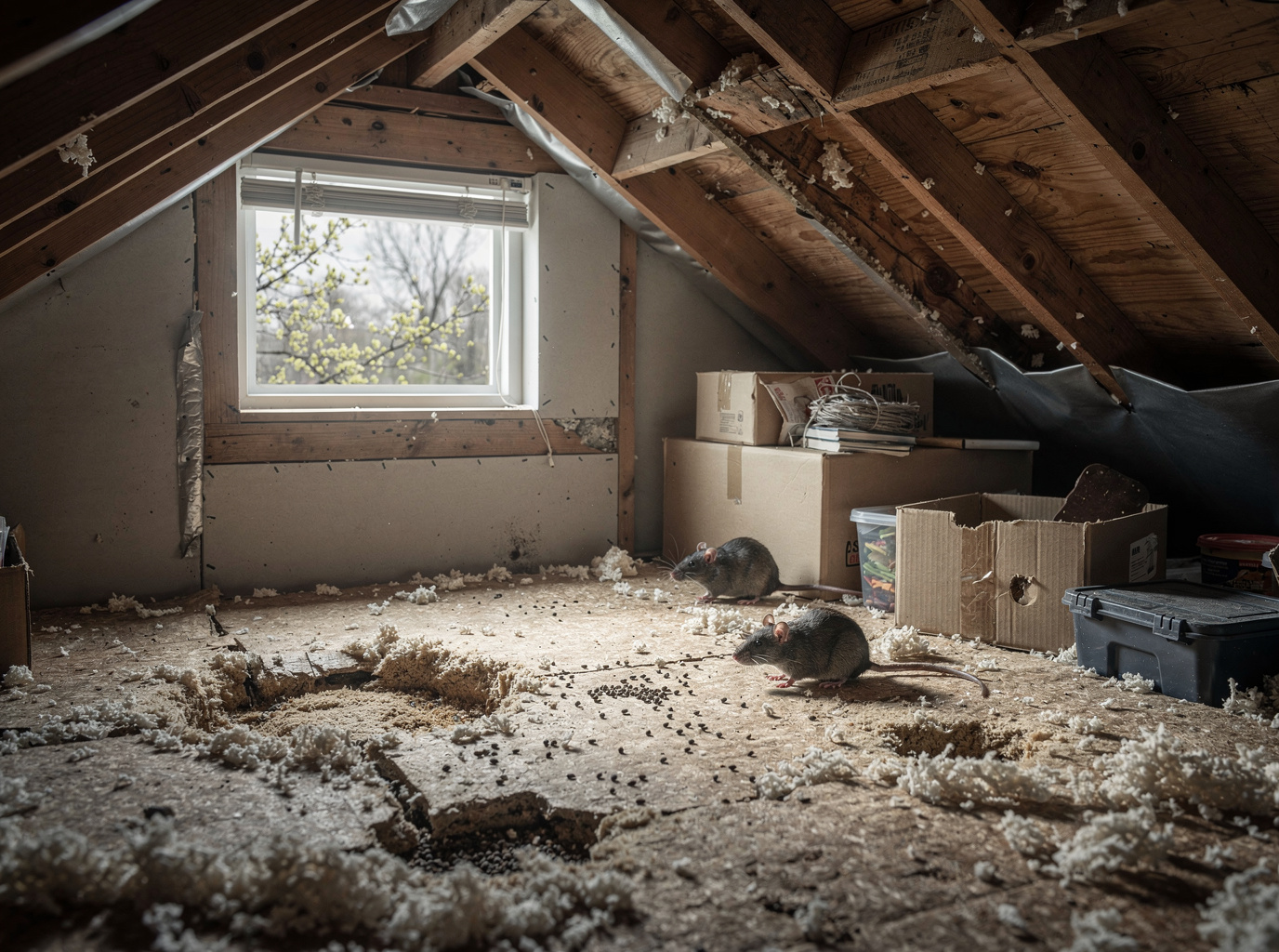
Imperial Oaks features single-family homes built mostly in the 1980s and 1990s on larger lots that back up to wooded edges and drainage ditches. These conditions let roof rats and Norway rats move easily from green spaces into attics and crawlspaces, especially once summer heat and humidity push them indoors. Spring Rodent Control Pros, based at 20807 Marilyn Ln, reaches Imperial Oaks quickly via Rayford Road to inspect soffits, foundation vents, and fence lines where rodents travel.
Heavy rains common in this part of Harris County flood low spots along the neighborhood's drainage ways, creating soft soil for burrowing and washing away previous treatments. Our crews focus on sealing entry points around garage doors and utility penetrations that are typical on Imperial Oaks homes, then place bait stations along fence rows that connect to nearby greenbelts.
Fall and winter bring cooler nights that drive rats deeper into the older rooflines and storage sheds found throughout Imperial Oaks. We schedule follow-up visits timed to these seasonal shifts so treatments hold through the humid months when new litters appear.
Around Imperial Oaks
We regularly work near:
- 📍Imperial Oaks Park
- 📍Imperial Oaks Elementary School
- 📍Imperial Oaks subdivision entrance off Rayford Road
- 📍drainage ditches along Woodson Road
Rodent Control in Imperial Oaks — Local Notes
- •Many Imperial Oaks lots sit on clay-heavy soil that holds moisture after storms, softening ground for Norway rat burrows along fence lines and shed foundations.
- •Homes backing to the drainage corridors near Imperial Oaks Park see repeated roof rat activity because tree canopy and ivy provide travel routes over fences.
- •Crawlspace access on 1980s-1990s builds is often limited by HVAC equipment placement, requiring targeted exterior baiting instead of full interior entry.
- •Proximity to Spring Creek Greenway means rodents follow the same utility easements that run behind multiple streets in the subdivision.